






F1 Hybrid Trial Results: Achieving 1.8kg/m² With High Uniformity

Published
New data from a Montréal research facility highlights the yield potential and structural uniformity of Orion F1 and Medusa F1 cultivars in a controlled setting.
In the world of indoor cultivation, "record-breaking yields" are often met with a healthy dose of scepticism. However, a recent controlled trial conducted by CRIC Labs in Montréal, in collaboration with Royal Queen Seeds (RQS), has produced data that demands a closer look.
The study reported an impressive yield of 1.8 kg per m² in a total cycle of just 69 days from seed. While the raw numbers are eye-catching, the real value for the CannaConnection community lies in the data regarding uniformity and repeatability—two factors that often matter more to a serious grower than a single heavy harvest.
The setup: Precision and density
The trial focused on two specific autoflowering varieties: Orion F1 and Medusa F1. To achieve these results, researchers maintained a density of 5.4 plants per m².
What stands out here is the speed of the lifecycle. By utilising a shortened vegetative phase followed by a synchronised flowering period, the crop reached maturity in under ten weeks. In practice, this suggests that true F1 hybrids may offer a predictable turnaround that suits growers looking to maximise their annual "harvest-per-square-metre" metrics.
Uniformity: The hidden advantage
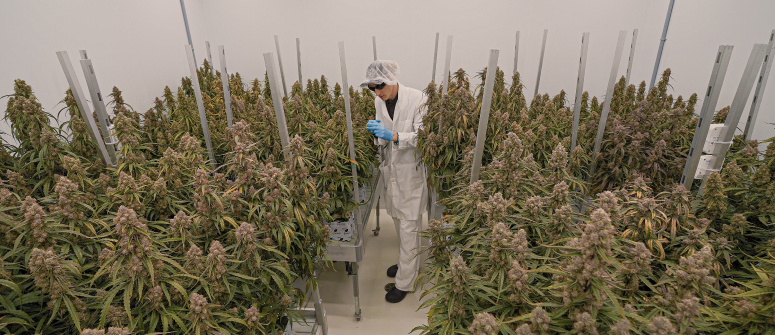
Beyond the final weight, the researchers at CRIC Labs noted a striking level of structural consistency across the canopy.
- Synchronised Growth: Plant heights remained closely matched throughout the cultivation area.
- Reduced Labour: This uniformity reduced the need for individual light and irrigation adjustments across the room.
- Predictable Inputs: When a canopy behaves as a single unit, it becomes significantly easier to maintain consistent inputs across the crop.
Is this achievable for the home grower?
It is easy to dismiss lab results as something only possible in large-scale facilities. However, Simon Charette, who oversaw the project, suggests a more grounded perspective. He noted that for a grower who is knowledgeable about their environment, these levels of output are "totally achievable" even at a smaller scale.
This aligns with the core promise of F1 genetics: by reducing the "genetic lottery" of traditional seeds, the plants become more robust and less prone to the surprises that can derail a harvest.
Looking ahead: Photoperiod F1s
The timing of these results coincides with the expansion of the RQS F1 programme into photoperiod varieties. While the CRIC trial focused on autoflowers, the same breeding principles are now being applied for those who prefer more control over vegetative time and training while still targeting uniform structure.